DATOS PERSONALES

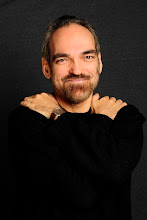
Mi foto
* Escritor y periodista especializado en los aspectos políticos de la globalización. * Presidente del Consejo del World Federalist Movement. * Director de la Cátedra de Integración Regional Altiero Spinelli del Consorzio Universitario Italiano per l’Argentina. * Profesor de Teoría de la Globalización y Bloques regionales de la UCES y de Gobernabilidad Internacional de la Universidad de Belgrano. * Miembro fundador de Democracia Global - Movimiento por la Unión Sudamericana y el Parlamento Mundial. * Diputado de la Nación MC por la C.A. de Buenos Aires

martes, 29 de enero de 2013

lunes, 21 de enero de 2013

Entrevista DÍA DE CIERRE (diciembre 2012)

Los chicos de Día de Cierre, Juan Cruz Sanz y Lucas Morando, me hicieron en diciembre uno de los mejores reportajes de mi vida. Buenas preguntas y clima amable. ¿Qué más se puede pedir? 

A los que siempre se quejan de que no me dejan hablar o de que "no tengo propuestas" les va a interesar. 
Está en  http://www.youtube.com/watch?v=XS3WI4ls_W4&feature=youtu.be  Ojalá que lo disfruten. 


domingo, 20 de enero de 2013


SKYPE INTERVIEW BRIAN COUGHLAN-FAI ON UNPA – JAN 2013


Fernando Iglesias: Democratic supranational institutions are needed to avoid a global cataclysm

Brian Coughlan | January 14th, 2013
Interview with Fernando Iglesias
Interviews
Fernando Iglesias
AUDIO IN  http://blog.unpacampaign.org/assets/Fernando-Iglesias-UNPA-Interview-5.mp3

Last week I spoke to Fernando Iglesias, a writer and a member of the Argentinan Parliament from 2007 to 2011, who was recently elected as chairman of the the council of the World Federalist Movement. His books include “La modernidad global”, an analysis of the “complex dynamics of globalization” published in 2011. Fernando is also a professor at the Universidad de Belgrano in Buenos Aires and during his term in the Argentinian Parliament, he was also Co-Chair for the Global South of the Parliamentary Advisory Group of the Campaign for a UN Parliamentary Assembly.
We talked about world federalism, regional integration, global challenges, the role of the nation-state, the meaning of global democracy, global change and what the future might look like. The discussion was supposed to last five minutes but instead we ended up talking for over twenty!

http://blog.unpacampaign.org/wp-content/plugins/podpress/images/audio_mp3_button.png Interview with Fernando Iglesias [ 20:18 | 18.59 MB ] Hide Player |Play in Popup | Download


Audio transcript of the interview 

Today I’m speaking to Fernando Iglesias, a former Member of the Argentinan Parliament and current chair of the World Federalist Movement. Welcome to the UNPA Audio blog!
Hi Brian, nice to hear you.
We’ve been trying to get a hold of each other for a while. We finally managed to get together, that is excellent. In July you were elected as the chair of the council of the World Federalist Movement. For our listeners, could you say in a few words what the World Federalist Movement is about?
I was elected chair of the council of the World Federalist Movement and this is a big responsibility as it is the first time someone from the South has been elected, this is a sign of the times.
The World Federalist Movement is a very important movement that tries to put on the table the question of the political organization of our global world, meaning the idea of federalism which was thought of as being  a way of organizing national states. It is also a great idea to be applied to the global world, meaning we should have federalism at the regional level, maybe the European Union is the best example – but we need also to have federalist structures at the global level. Then we need to reform the United Nations, create new agencies and establish the rule of law at the global level. The basic contribution of the World Federalist Movement is the existence of political union inside the European Union – which was originally only an economic project; meaning the European Parliament for example, and also the campaign for the establishment of an International Criminal Court was an initiative of the World Federalist Movement at the beginnings of the 1990s…
…can I stop you there very briefly? The World Federalist Movement has important programs on the International Criminal Court and the Responsibility to Protect. So what do you think is the next important milestone in the world federalist strategy – from that point of view – from the International Criminal Court, Responsibility to Protect-point-of-view?
I think we should move towards two other goals, in addition to the development of the International Criminal Court and Responsibility to Protect - these two goals are, in my opinion, the campaign for regional integration, meaning defending and promoting European regional integration now, but also using this model for different regions of the world which in different ways need something similar; need more political union; need more agreement on the common interests of their citizens…
…sorry, Fernando. So the European Union is a good example of the way things are going? Which other regions do you think could go the same way or in the same direction?
I think that there are many aspects of European integration that should be extended to other regions. Not the general model which can change according to the local situation. When I say European integration I mean a model of political integration with supra-national institutions, a supra-national parliament, a supra-national court of justice; meaning also the economic development but also the welfare state. It’s very important to defend the European welfare state and not just to defend it inside Europe but to promote this kind of welfare state all over the world.

This year you initiated a manifesto for global democracy that was signed by a large number of intellectuals from around the world, and you are also working on regional integration and a UN Parliamentary Assembly. So you’ve talked a bit about regional integration. Now how do you connect that to the UN Parliamentary Assembly? What does that look like?
A basic fact of the last 20 years was the globalization of the economy and finances without the globalization of politics; particularly democratic institutions. So we are living in an imbalanced world in which finances and economy are very, very strong and politics is not. So we need to regulate the global market and we need to make technological improvements, this benefits all human beings all over the world and that is why we need - in one way - to build this kind of supra-national institutions, we need to democratize globalization. Meaning building democratic institutions above the national and state level, meaning the regional and global levels; that’s why we need a regional integration on the one hand and a UN Parliamentary Assembly on the other hand.

So just to clarify: basically what you’re saying is that on the one hand we have an integrated unified or nearly unified global economy but on the other hand we have no political accountability and that is the big imbalance…
…this is one of the problems; and the crisis of 2008  – which is still continuing – shows that you cannot manage a global economy through international agencies; you need global agencies and you need these global agencies to be democratic, like the United Nations Parliamentary Assembly. These are the kinds of agencies that should be created inside the United Nations. We need these kinds of agencies not only for economic reasons but also for ecological reasons; we need also to stop nuclear proliferation; and we need to make decisions about a lot of global crises and global trouble we are facing now; like criminality; trafficing of drugs and people. That’s why we need to build these kinds of global institutionsm, just as we built national institutions some centuries ago.

And yet the manifesto you initiated starts off with a statement that politics is standing still and resists the trend of globalization and it seemed, perhaps 15 years ago, that the nation-state was on its way out, that the nation-state was doomed, but now global politics has become very nation-state centric again. How do we explain this? How can a UN Parliamentary Assembly help us overcome this national-centric global governance model?
The first thing we need is an explanation. Why are we coming back to the past? I think that the world is facing now a kind of challenge; the kind of challenges that Europe faced at the beginning of the past century. When the international crises and global crises started at the beginning of the 20th century, the first reactions were to be nationalistic: “our country,” “our family,” needs to be kept safe from international affects. The problem is: if you continue this way you’re going to face the same kind of scenario of the European crisis during the first part of the past century when everybody was focused on their own country.
Then you have protectionism, you have nationalism, then you have crazy men like Hitler and Mussolini starting to develop big armies and you need to do the same; and you know, we know where all these forces go. So we need to stop that and apply a different logic in which you keep national states – but you integrate national states and national interests into a more complex order which is global. Which is regional on the one hand, but which is global – and this is the challenge of the 21st century. Because, if we don’t find the way of managing nuclear proliferation, global warming, financial crises, in a common way – in a participative and democratic way, we’re going to have the same kind of craziness.

Fernando, I have one last question for you. You’ve touched on this idea of a kind of a hierarchical structure. The nation-state at the bottom, regional institutions in the middle, and the UN Parliamentary Assembly on top. Is that kind of what you’re looking at? Is that an accurate portrayal of the structures you envisage?
Well, I think there are so many processes going on. For instance the G20. Ten years ago, the discussion was if global institutions were meant to be! But now the real question is: these institutions which already exist – meaning the World Trade Organization, G20, and the United Nations Security Council etc. – the question is if these organizations are going to be democratic or not; and this is a repetition of the history of the world. Because national powers were not democratic at the beginning they existed – and then they became democratic through the work of organizations, citizens etc. 
So we need to start something similar. We need to think about developing democratic agencies. For sure the United Nations Parliamentary Assembly would be perhaps the most emblematic one; but we also need regional parliaments; and a real court of justice; and we need also the International Criminal Court to be more balanced and be strengthened in order to judge criminals, crimes against humanity - like the war in Iraq, for instance. So there are so many ways.
What is very clear now is that there is a general dissatisfaction about the way politics exists at the global level and we need new answers, so, of course, a United Nations Parliamentary Assembly – by the way, I was the chair of the parliamentary advisory group of the South for many years and work together with the people who are developing this amazing initiative. We need to push on with the participation of people, the participation of citizens of the world , and this kind of initiative is crucial in order to put this on the agenda.

The American Revolution, the French Revolution these were all – even to some degree I suppose the Russian Revolution in 1917 – these were all critical pivotal points. What is the equivalent breakthrough moment for global democracy? Is there some kind of critical mass? Is there some key pivotal moment? Has it maybe already happened? What would such a breakthrough look like?
Well, firstly, I wouldn’t put together the Russian Revolution with the French and American Revolutions. Focusing on these two last ones, the French Revolution and the American Revolution appeared in a moment of history that was very clear. It was a change from a civilization which was based on agriculture and had a particular way of political structure, meaning monarchy and the Pope etc., very hierarchical powers. Then the techno-economic environment changes from agriculture to the industrial revolution and then, of course, the old structures were not able to cope with the challenges of the future, so I think that the French and American revolutions were a way of adjusting the political system to the new conditions that were created by industrialisation and now we are facing exactly the same thing; because we are changing from the industrial society to a new global society of knowledge, information, Internet, mass media, communication, innovation. So the old structure of industrialism - meaning basically national states and secondarily international organisations - are not able to cope with the challenge of the future. If we’re not able to change, and change in a fast way, we are going to face a very critical situation and I have to say that at the moment the initiatives are all very valuable but are still very far away from the objectives we need to achieve.

It sounds like you’re saying the breakthrough moment has already occurred, the Internet, social media and the ability for many millions of people to contact each other and exchange ideas; that information revolution is already underway and that to some degree is what is pushing the agenda forward.
Yes, yes, of course, of course! I mean nobody knew that the Soviet Union was going to fail till the moment it failed and these kinds of ongoing processes – you are building a critical mass and you don’t know that something is really happening until it happens – like in the Arab Revolutions, the Arab Spring, whatever.
Anyway, I think the real question now, for me, is: are we going to be able to develop these kinds of new structures as fast as the techno-economic situation changes the world? Because we are clearly  – and this is another assumption of the global democracy manifesto about the delay in politics - we’re facing an amazing change in the techno-economic aspect of life but the change in politics is very slow in comparison. So the problem is: we’re in a similar situation to which Europeans were a century ago and could face a big catastrophe before we arrive at the correct conclusions.
We need real input from civil society, from the citizens, from the political system in order to change the order and build new institutions, so this is the real question: whether we are going to arrive at these new democratic global structures before a big crisis occurs or after? Millions of lives, maybe the future of humanity, is at stake.

So we can do this the hard way or we can do it the easy way. The easy way is to recognize our shared interdependence and to act on it to create relevant institutions. The hard way is to have some kind of global war or some kind of global ecological collapse and emerge out of that and do the same thing anyway?
Yes, this is the point of history in which I think we are… I could be wrong…

…no, I agree. I think you’re right. We’re very much on the same page…
…in any case, if we’re going to face a disaster, the point is to compare the end of the First World War and the end of the Second World War. At the end of the First World War, the political decision was to keep the politics and institutional organization of politics at the national level and the results of such a wrong decision was the Second World War.
In the meanwhile there were many people – Altiero Spinelli, Lionel Robbins – who were working hard keeping the mind on the need of creating some kind of federal union of Europe and to overcome the national paradigm. At the end of the Second World War, we have a catastrophe which was even worse than the first but the right idea was inside the minds of many politicians - Schumann, Jean Monnet – and the united Europe was built and the result was – even if there are many things to say, Europe is in crisis etc. - Europe has had a long period of peace and social progress and economic development for sixty years. So the problem now at the global level is this: at least if we’re going to face a global crisis, we need to develop the right ideas for changing the world before or after the crisis.
Absolutely, let’s hope we go the easy way! We do it the easy way so we don’t have to go through the birth canal of some kind of violent conflagration or ecological collapse or something before we realize that we really all have to pull together.

Fernando, thank you for chatting to me, I appreciate you taking my call.

jueves, 17 de enero de 2013


Mi nota APOCALIPSIS FRÍO, con todo lo que hay que saber para arruinarse las vacaciones, ya está en http://www.lanacion.com.ar/1546023-apocalipsis-frio 

"Tienen razón los gurúes kirchneristas: el país no está como en 2001; está peor..."

domingo, 13 de enero de 2013


FRAGMENTOS DE UN DISCURSO FASCISTA


DISCURSO DE LA PRESIDENTE DE LA NACIÓN EN OCASIÓN DE LA RECUPERACIÓN DE LA FRAGATA MALVINAS

Este día marca un jalón trascendente para la historia argentina, en un momento histórico muy particular. Miles de ciudadanos, hombres y mujeres en todo el país, en todos los pueblos, en las pequeñas granjas, en las ciudades y en esta Plaza de Mayo histórica que ha marcado rumbos a través de la Historia nacional, argentinos que hoy se han acercado aquí a Mar del Plata o que, desde el lugar en que estén, están presenciando lo que tal vez simbolice con mayor precisión que en otras ocasiones la defensa irrestricta de los derechos de la Argentina y el respeto a su soberanía y dignidad nacional. 

Argentina, una vez más, sufre los ataques de fondos buitre y también de otros que nos amenazan a catorce mil kilómetros con venir a militarizar o invadir nuestras Islas Malvinas. Es un despojo que hoy hemos lavado. El hidalgo pueblo argentino tiende sus manos al adversario, dando un ejemplo de templanza, de responsabilidad y de coraje, que es lo que hay que tener también. Se trata de derechos que pacientemente y prudentemente hemos tratado de reivindicar por las vías diplomáticas, de convicciones que, en esta ocasión, estaban además acompañadas por el derecho internacional, por los tratados firmados y por todo el orden jurídico global que decía que teníamos razón.

No hemos hecho otra cosa que interpretar el sentimiento del pueblo argentino. Escuchamos el clamor de nuestro pueblo, que pide – por sobre todas las cosas – respeto y dignidad al pabellón nacional y a los derechos de la Patria. Cada uno de ustedes, hombres, mujeres, la gran juventud argentina y la niñez, está sintiendo, como yo, una alegría y una tremenda emoción por este acto argentino. Creemos en nuestras Fuerzas, creemos en Dios, en la Patria, y diviso también la sagrada imagen de la Virgen de Luján, Patrona de todos los argentinos. Me interesa la Patria. Defiendo la bandera. ¡Y ya flamea la bandera argentina en nuestras islas! 

La dignidad y el orgullo nacional han de ser mantenidos a toda costa y a cualquier precio. Era preferible que la nave se fuera a pique antes que arrear el pabellón nacional. Esos son los patriotas y esos son los hombres, como el almirante Brown, que necesita el país. Somos un gobierno acostumbrado a sufrir presiones internas, externas, subterráneas, planetarias, y vamos a seguir resistiendo porque por la extorsión y por la fuerza nadie va a obtener nada de la República Argentina. Por eso voy a seguir luchando siempre desde cualquier lugar por el bienestar del pueblo, por la grandeza de la nación y por la felicidad de todos los argentinos. 

Yo les agradezco en nombre de los tres Comandantes y de las Fuerzas Armadas -que son de ustedes, no son nuestras, las Fuerzas Armadas argentinas pertenecen al pueblo de la Nación- esta manifestación de sentimiento y alegría que hoy todo el pueblo argentino comparte después de 150 años de lamentable claudicación. Gracias, señores. Gracias, muchas gracias por todo el aguante de estos setenta días. Muchas gracias a los integrantes de la Fragata, gracias a sus familiares, gracias a todos lo que acompañaron y pusieron garra y lo que hay que poner para defender a la Patria. ¡Viva la Patria! ¡Viva la Patria! ¡Viva Argentina! Gracias, muchas gracias. 

PS: El texto precedente ha sido compuesto con fragmentos de los discursos pronunciados el 2 de abril de 1982 por el Presidente de la Nación, general Leopoldo F. Galtieri, y el 9 de enero de 2013 por la Presidenta de la Nación, doctora Cristina F. de Kirchner. Invito a los lectores a descubrir qué párrafos pertenecen a cada uno de ellos.

viernes, 7 de diciembre de 2012

LA LEY DE MEDIOS ES PÉSIMA

LA LEY DE MEDIOS ES PÉSIMA

Entre las muchas voces ponciopilatistas que "critican" al Gobierno se está abriendo paso otra forma de justificación del atropello: la idea de que "La ley de medios es buena, pero el kirchnerismo la aplicó mal". 
Es muy difícil discutir una ley de más de 160 artículos en TV, por lo que presento de nuevo aquí las objeciones que hice en el debate de la Cámara de Diputados en 2009, y que cierra con un encuadre político de la situación que me parece de gran actualidad.

DISCURSO ANTE LA CÁMARA DE DIPUTADOS

".... hemos objetado las atribuciones, las competencias abusivas de la Autoridad de Aplicación que fija esta ley para establecer una mordaza contra la libertad de prensa, tan similar a la espada de Damocles del Consejo de la Magistratura que tiene amenazados y maniatados a los jueces argentinos para que otorguen impunidad al Poder.

Y voy a los puntos específicos del proyecto de ley. Considero vergonzoso que la autoridad de aplicación siga teniendo mayoría oficialista. Ya era bastante malo cuando podía elegir el sesenta por ciento -tres de cinco- y ahora es peor porque serán cinco de siete, lo cual es el 71 por ciento. Y es vergonzoso también que la autoridad de aplicación aún esté en el ámbito del Poder Ejecutivo Nacional, que dependa del Poder Ejecutivo Nacional. Lo es porque la libertad de expresión es la libertad de criticar al Poder, y no se puede criticar al Poder si éste tiene los medios para taparnos la boca, para amordazar dando de baja una licencia.
   Voy a las funciones de la autoridad de aplicación, fijadas por el artículo 12. Una es la de “elaborar y actualizar las normas técnicas que regulan la actividad”. Esto se los digo a quienes afirman que es un gran avance que hayan quitado la revisión bianual. Por el artículo 12 tenemos una revisión que puede ser bisemanal o cada dos horas, porque esta autoridad de aplicación, en el ámbito del Poder Ejecutivo y con mayoría oficialista, puede elaborar y actualizar las normas técnicas que regulan la actividad cuando quiera.
   Otra facultad es la de “otorgar la correspondiente habilitación y aprobar el inicio de las transmisiones”. O sea que sin permiso del Poder Ejecutivo Nacional nadie puede siquiera ni empezar a funcionar.
        Otra es la de “sustanciar procedimientos para los concursos y adjudicación directa”. Voy a tocar este punto más adelante. Paso a la facultad de ”declarar la caducidad de las licencias, permisos y autorizaciones”. O sea que si no le gusta lo que apareció o lo que se dijo en un canal, el Poder Ejecutivo, a través de sus mandaderos, puede declarar la caducidad de las licencias, permisos y autorizaciones.
   Asimismo la autoridad de aplicación se adjudica la atribución de “aplicar las sanciones correspondientes por incumplimiento de la presente ley”, sin que estén especificados los aspectos más elementales que fijan el Código Civil y la Constitución Nacional: el derecho a la defensa y la proporcionalidad entre las faltas y las sanciones. Nada de esto está contemplado y este es otro artículo que hace inconstitucional la presente ley.
   Otra atribución: “Declarar la ilegalidad de las estaciones y emisiones”. Me pregunto: ¿Esta es la ley de la democracia?
          En cuanto a “modificar los parámetros técnicos” y “habilitar al personal técnico y de locución”, ello quiere decir que los trabajadores, que se habían ilusionado con que ahora les darían trabajo y que se encontrarán con la novedad de que la pauta publicitaria oficial se la llevó el señor Julio Grondona, van a tener que pedir un “carnetcito” al Poder Ejecutivo Nacional para que los habilite como personal técnico o de locución.

          Saludamos el hecho de que se haya dado un paso atrás con el tema de las telefónicas, que fuera planteado por nuestro bloque, pero decimos que, además, los proveedores del Estado no deben poseer licencias por las mismas razones que las telefónicas: porque si este Estado, que funciona como funciona, discrecionalmente, deja de pagar a los proveedores, éstos se funden. ¿Qué calidad e independencia de información puede ofrecer un proveedor del Estado que depende del Estado para hacer negocios y para que le paguen por el trabajo que ya hizo? Y voy a dar un ejemplo concreto, para no hablar en abstracto. El ejemplo se llama Electroingeniería, Radio del Plata y Nelson Castro, quien fue expulsado de su trabajo por haberle hecho un reportaje a un miembro de nuestro bloque, el diputado Morán, que denunciaba los favores que el Ejecutivo hacía permanentemente a la empresa Electroingeniería.
          Por otra parte, estamos en contra del artículo 98, en el que se hace otra vergonzosa delegación de facultades fiscales de este Parlamento hacia un organismo controlado desde el Poder Ejecutivo. Dicho artículo dispone que la autoridad de aplicación “está habilitada para disponer exenciones y reducciones de gravámenes”. Esto es una atribución fiscal que es responsabilidad del Parlamento argentino y no del Poder Ejecutivo. Es decir que seguimos con las facultades delegadas, con los superpoderes, con los decretos de necesidad y urgencia y ahora, en esta supuesta ley de la democracia, seguimos haciendo lo que la Constitución define como “infame traición a la patria”.

          Señor presidente: esta norma es inconstitucional, ya que por lo menos viola dos artículos de la Constitución. Uno de ellos es el que dice que el Congreso no dictará leyes que restrinjan la libertad de imprenta o establezcan sobre ella la jurisdicción federal. Cabe aclarar que cuando se redactó la Constitución se hablaba de libertad de imprenta porque no existían los medios de radiodifusión ni los audiovisuales, pero está claro que ello se aplica también para la libertad de prensa. No puede haber restricción de la libertad de prensa ni jurisdicción federal sobre la libertad de prensa, como la que fija esta ley en los artículos que acabo de mencionar y que violan la Constitución.
          Y esta norma también viola la Constitución porque esta última establece que el pueblo no delibera ni gobierna sino a través de sus representantes. Cuando una ley se elabora durante seis meses en foros que no tienen ninguna elegibilidad ni legitimidad democrática, con gente que no ha sido elegida por los ciudadanos, y se discute apenas seis horas en la Cámara de Diputados –donde estamos los que realmente representamos al pueblo de la Nación-, en el plenario de las tres comisiones a las que fue girado el proyecto, no se está sancionando una ley sobre la deliberación de los representantes del pueblo, como fija la Constitución, sino sobre los caprichos, atribuciones e intereses de los invitados a los foros del licenciado Mariotto.

          Esta norma, además de ser una mordaza, establece un monopolio de tres grandes sectores. Uno de ellos es el de los “prestadores de gestión estatal”, es decir,los medios públicos que hoy funcionan vergonzosamente como agencias de publicidad del gobierno –Canal 7, Radio Nacional y agencia TELAM-, y que de ninguna manera reflejan la pluralidad de opiniones de la sociedad argentina sino que son desembozadas agencias de publicidad oficial.
          Otro es el del “sector privado con fines de lucro”. En este sentido, el escandaloso artículo 32 –mucho más escandaloso aún que la autoridad de aplicación- prevé la adjudicación de las principales emisoras de radiodifusión abierta “por parte del Poder Ejecutivo Nacional”. Es decir que las radios y las emitentes televisivas con las que se informa la mayoría de los argentinos, sobre todo los más vulnerables que no pueden pagar el cable, van a depender no solamente de la autoridad de aplicación sino además de que el Poder Ejecutivo Nacional decida si pueden o no transmitir y quién transmite en esa frecuencia, convirtiendo a esos ciudadanos sin acceso al cable en ciudadanos de segunda categoría, sometidos a una información controlada por el Gobierno en nombre del Estado.
          Y la tercera pata de este gran monopolio gubernamental son las entidades “sin fines de lucro”. En esta norma no hay ningún mecanismo que establezca cómo se van a habilitar las licencias, a quiénes se les van a dar y a quiénes no. Por lo tanto, ya sabemos a quiénes les van a dar las licencias: a radio Moyano y a TV D’Elía, y a ninguno de los opositores. Todos los que hoy apoyan esta ley con la ilusión de que su ONG va a tener posibilidad de expresarse y que muy probablemente no podrán financiarse autónomamente van a depender además de la pauta publicitaria oficial, que ‑como fue fácil comprobar en estos últimos años‑ se usa como método de sanción y de castigo para las voces críticas y de soborno para las voces obsecuentes de este gobierno.

          No quiero terminar mi exposición sin encuadrar esta norma en la situación política en la que estamos, por la gravedad extraordinaria que tiene. Asistimos a la destrucción del Estado en nombre de la revitalización de su rol. Ya las patotas de Moreno se cargaron el INDEC, que es un organismo fundamental. Un Estado que funciona sin un instituto de estadísticas confiable es como un avión que vuela sin instrumentos. Ahora se acaban de cargar a la AFIP. Me pregunto si un juez de la República que reciba una denuncia de la AFIP por evasión impositiva va a pensar que ella proviene de una agencia autónoma del Estado que intenta cumplir su deber o si es simplemente una revancha de este Gobierno contra sus socios o contra quienes le molestan por sus opiniones o acciones.
          Destruyen el Estado cuando destruyen el INDEC; destruyen el Estado cuando destruyen la AFIP y la transforman en una fuerza de choque en función de los intereses del kirchnerismo, y lo hacen en nombre del Estado. Después de gastar las palabras “progresismo”, “centroizquierda” y “derechos humanos”, ahora también “rol del Estado” es otra expresión gastada, usurpada y tratada como un trapo de piso por el kirchnerismo.

          La situación política en la que esta ley se instala es fácil de describir en términos de destrucción de la democracia desde dentro de la democracia. Tenemos un Poder Ejecutivo donde los ministros que se oponen a la corrupción son expulsados mientras los bocones y obsecuentes son mantenidos en sus puestos. En tanto, pasaron ya seis años sin una sola reunión de ministros.  Un Poder Ejecutivo Nacional que –como se ha dicho insistentemente en este recinto sin que ningún fiscal de la República se entere‑ es ejercido por el doctor Néstor Kirchner y no por quien debería, que es la Presidente de la Nación elegida por los ciudadanos argentinos, Cristina Fernández de Kirchner. Lo he denunciado yo mismo penalmente y todavía no hay un juez para esa causa, y no lo hay porque el Consejo de la Magistratura vigila.
          Tenemos un Parlamento vaciado que firma leyes como una escribanía, que considera en diez horas una ley de semejante magnitud, con más de ciento sesenta artículos y doscientas quince modificaciones hechas en pocas horas. Es un Parlamento vaciado que además cometió el escándalo de sancionar leyes con un apresuramiento similar vetadas después por la Presidente de la Nación, mientras el presidente de la comisión correspondiente aceptaba que había firmado la ley sin leerla. Volvemos hoy a las andadas porque se trata de un Parlamento vaciado en el que aún cuando el oficialismo y la oposición se ponen de acuerdo para sancionar leyes como la de glaciares o la de emergencia agropecuaria, la Presidente las veta, con lo que anuncia lo que hará después del 10 de diciembre: veto para las leyes del Parlamento y decretos de necesidad y urgencia para todo lo que necesiten los Kirchner.

          Además, tenemos un Poder Judicial vaciado y controlado desde el Consejo de la Magistratura. Una libertad sindical que consiste en que el señor Zanola está ahí desde hace veinticinco años sin que nadie le diga nada, mientras que los afiliados bancarios se mueren porque les dan píldoras truchas; un sindicalismo trucho y una libertad de expresión que quieren cargarse hoy los Kirchner a través de esta ley. Y tenemos un Parlamento, una oposición, un oficialismo y un periodismo argentinos que, según declaraciones de alguien inobjetable –porque de todo esto Alberto Fernández sabe mucho‑, saben que hay escuchas telefónicas en todos sus teléfonos: en el suyo, señora presidenta, en el mío, en los del oficialismo y en los de la oposición. Salúdelo, señora presidenta. Ya que seguramente la está escuchando el ministro Aníbal Fernández; mándele saludos de mi parte.

                    Este es el país en el que vivimos, con un Poder Ejecutivo, un Parlamento, un Poder Judicial, una libertad sindical y un sistema de garantías institucionales para ejercer los deberes del periodismo, del oficialismo y de la oposición vergonzosos: la destrucción de la democracia con la excusa de la democracia."
           

jueves, 15 de noviembre de 2012

Hoy jueves 15, a las 21.00 hs., estaré en Plan M con Maxi Montenegro por Canal 26, discutiendo sobre actualidad nacional. 
Los espero. 

miércoles, 14 de noviembre de 2012


Hoy miércoles 14 a las 22.00 hs. estaré en A dos Voces (TN) discutiendo el 8N con el ex vicecanciller de Néstor Kirchner, Eduardo Valdez. 
Los espero.